

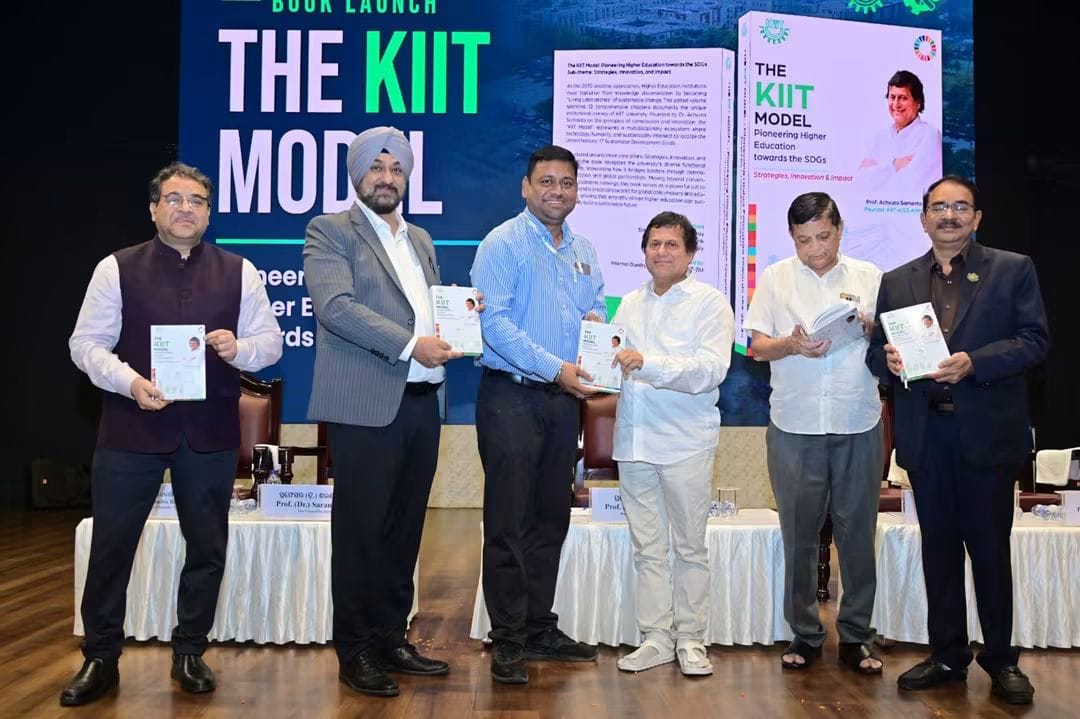
Achyuta Samanta Unveils “The KIIT Model: Pioneering Higher Education towards the SDGs”
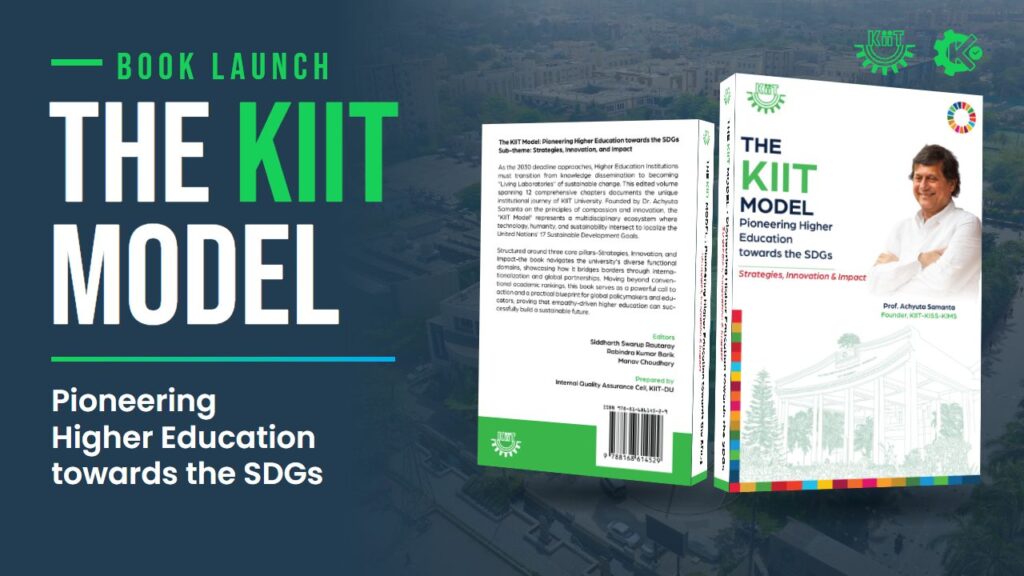
Prof. (Dr.) Achyuta Samanta, Founder of KIIT, KISS, and KIMS, launched the book titled The KIIT Model: Pioneering Higher Education towards the SDGs: Strategies, Innovation and Impact during the Annual Teaching Staff Meeting at KIIT Deemed to be University. Published by the Internal Quality Assurance Cell (IQAC) and dedicated to Prof. Samanta, the volume illustrates how the KIIT ecosystem merges academic excellence, technological innovation, social responsibility, and environmental stewardship to advance the United Nations Sustainable Development Goals (SDGs).
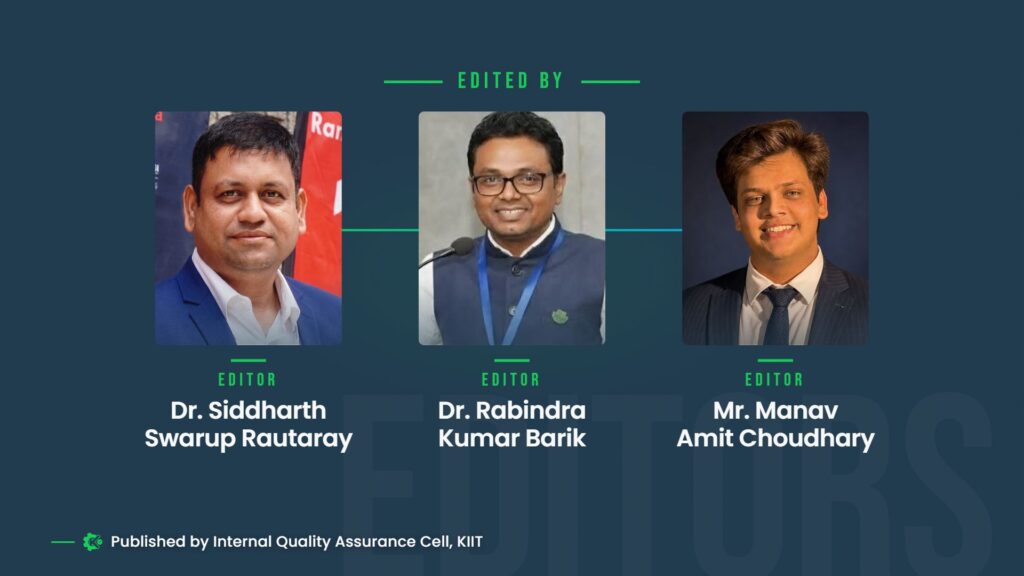
Comprising 12 chapters authored by 20 contributors, the edited book is organized around three foundational pillars: Strategies, Innovation, and Impact. It establishes a model for higher education institutions (HEIs) to act as catalysts for community empowerment, scientific advancement, and inclusive growth.

A central concept highlighted in the publication is the university as a “Living Laboratory.” Rather than treating sustainability as a purely theoretical concept, KIIT converts its infrastructure into an active testing ground. The green campus demonstrates operational solutions in solar power, rainwater harvesting, zero-waste management, biodiversity conservation, sustainable transport, and resource efficiency, bridging campus operations with student learning and research.The book documents how KIIT’s specialized arms contribute to specific SDG targets through KISS (Kalinga Institute of Social Sciences): Tribal empowerment and equitable access to free education., KIMS (Kalinga Institute of Medical Sciences): Healthcare delivery and medical research, KIIT-TBI & CRF: Entrepreneurship incubation and advanced interdisciplinary scientific research and Social Infrastructure & Culture: Utilizing sports for social inclusion, preserving artistic heritage, and fostering global academic partnerships.By combining empirical case studies with SDG localization analysis, the text measures institutional outcomes across climate action, gender equality, healthcare, clean energy, and international collaboration.
The KIIT Model serves as a practical guide for university administrators, policymakers, and sustainability researchers. By offering a blueprint for embedding global development priorities into academic governance, infrastructure, and outreach, the book demonstrates how modern universities can lead the transition toward a sustainable future.