

KSPH Director Wins First Prize in National POSHAN Museum Contest
In a prestigious achievement for KIIT Deemed to be University, Dr. Ramya Pinnamaneni, Director of the KIIT School of Public Health (KSPH), has secured the first prize in the coveted national POSHAN Museum Contest.
The nationwide initiative was hosted by the Savitribai Phule National Institute of Women and Child Development (SPNIWCD) under the guidance of the Ministry of Women and Child Development (MWCD), Government of India, in collaboration with MyGov India.
The contest sought innovative concepts to establish a state-of-the-art museum dedicated to reviving India’s rich traditional food wisdom and integrating it with modern health science. The museum will highlight balanced diets, life-cycle nutrition, and India’s diverse food heritage through zones on food history, nutrition science, traditional cuisines, policy initiatives from the Integrated Child Development Services (ICDS) to POSHAN 2.0, Ayurveda-based knowledge, and a dedicated children’s corner.
Out of 1,666 entries submitted across the country, Dr. Pinnamaneni secured the top spot under the “Interactive Learning Zone” theme.
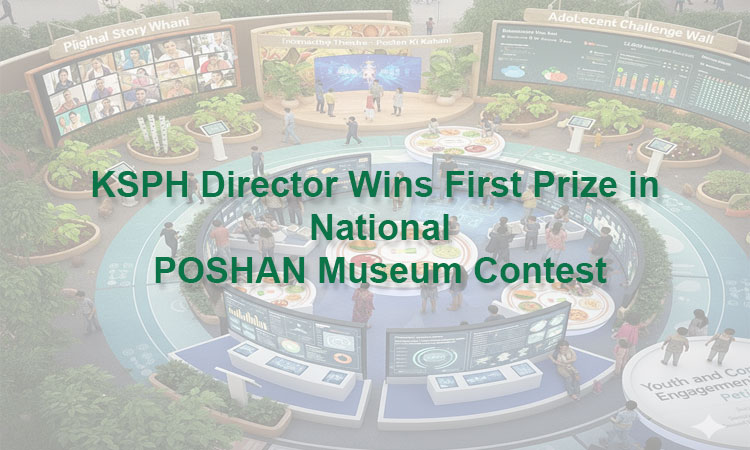
Dr. Pinnamaneni’s individual proposal, which offers immense potential for institutional academic collaboration with KSPH, KIIT-DU, and KISS-DU, envisions a transformative, immersive space anchored in Social and Behaviour Change Communication (SBCC). Rather than a static exhibit, the proposed hub acts as a living laboratory structured as a circular journey – symbolizing the cycle of nutrition, growth, and community action. The concept bridges the gap between classrooms, communities, and national policy.
The winning framework features an interconnected ecosystem of interactive learning zones that seamlessly integrate digital tools, data visualization, and participatory learning through digital “thalis” and kitchen garden labs. The design incorporates multi-sensory storytelling, gamified behavioural tracking, and live demonstration areas to translate complex nutrition science into everyday choices. By blending puppetry, augmented reality, creative media, and crowd sourced citizen science, the design is engineered to transition visitors from passive observers into active health ambassadors within their families and communities.