

International Webinar on
“Generosity, Collaboration and Shared Progress” held at KISS DU
An international webinar on the theme “Generosity, Collaboration and Shared Progress” was organized at KISS-DU on 8th March, 2026 to observe International Women’s Day. The event was organized by the Center for Women’s Studies, Project K-Muse, KISS-DU, in collaboration with the Gender Sensitization Cell. The webinar brought together scholars, academicians, and participants from different parts of the world, including India, Europe, Australia, and New Zealand.
The program began with a welcome address delivered by Pragyan Mohanty, Dean, School of Tribal Legal Studies and Tribal Rights and Centre Head, Center for Women’s Studies, KISS-DU. In her address, she highlighted the multiple roles played by women in contemporary society and emphasized how women today are breaking social stigmas, overcoming barriers, embracing new challenges, and contributing significantly to innovation and social progress.
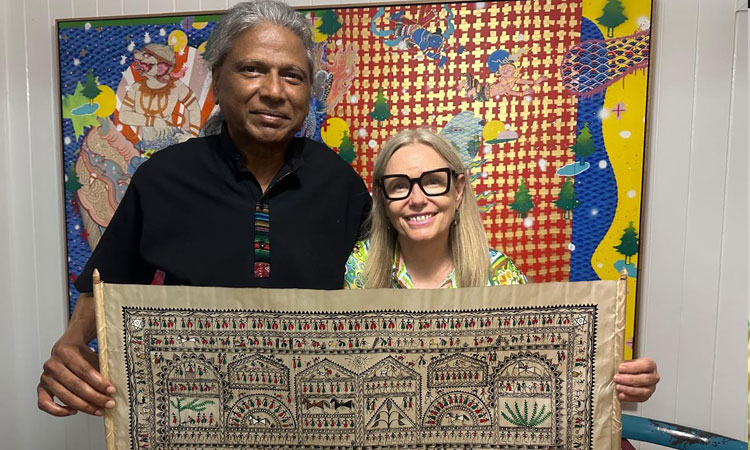
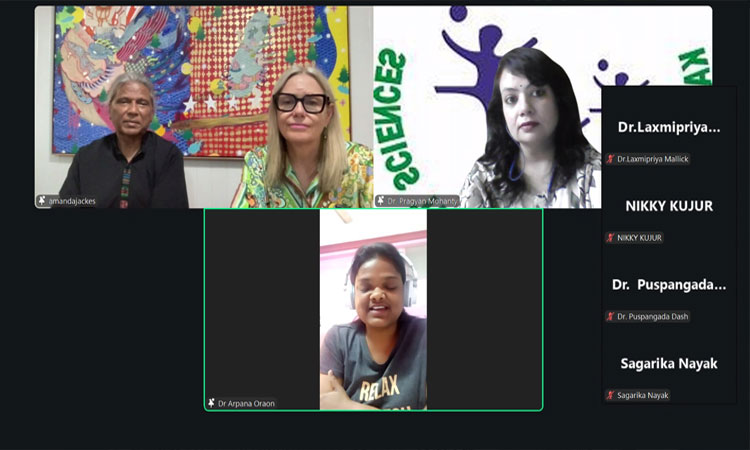
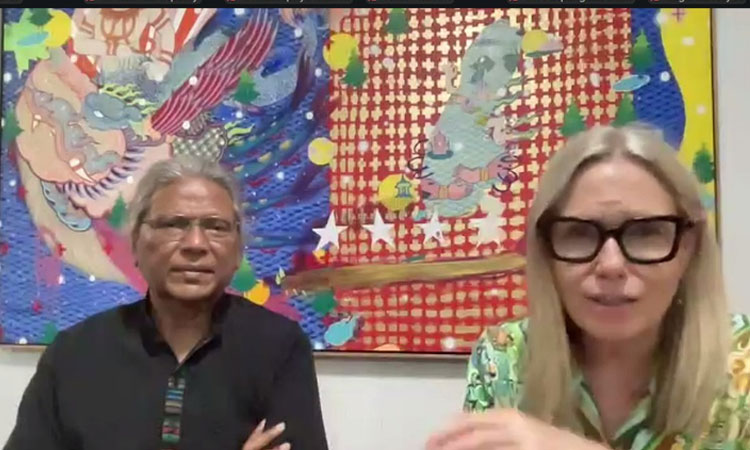
The webinar featured an engaging dialogue between Amanda Jacks, MD and Founder of Woodfordia and Board Member of Creative Australia, and Prof. Amareswar Galla, Pro-Chancellor of KISS-DU and Distinguished Professor at KISS & KIIT. The discussion focused on themes such as land, tribes, indigenous culture, festivals, development, and the role of women within indigenous communities.
During the dialogue, Professor Amareswar Galla initiated an insightful conversation by enquiring about the indigenous land and cultural landscape associated with Woodfordia, as well as the various festivals celebrated by indigenous communities in the region. He also raised questions regarding the economic development, livelihood patterns, and sustainability of indigenous communities, and further explored how women are positioned within these cultural and socio-economic frameworks.
Responding to these questions, Ms. Amanda Jacks provided detailed insights into Woodfordia, its land, and the indigenous communities living there. She described their cultural traditions and festivals, which form an integral part of their social life. She also elaborated on the role and status of women within these communities, highlighting the evolving position of women in Western societies and comparing it with broader cultural contexts. Her responses offered valuable perspectives on the interrelationship between land, culture, heritage, and gender roles within indigenous societies.
The dialogue was followed by an interactive Question and Answer session that further enriched the discussion. A. B. Ota, Professor Emeritus at KISS-DU, raised a question regarding the status of community museums in Australia. In response, Ms. Jacks and Professor Galla explained that community museums in Australia are often highly localized institutions with limited resources compared to large metropolitan museums. Despite these limitations, they play a crucial role in preserving local indigenous histories, cultures, and traditions.
In response to another question by a faculty member on the impact of indigenous culture on museums, Ms. Jacks elaborated on the strong influence of indigenous tribes on the cultural representation of land, people, and museum narratives. She emphasized how indigenous perspectives significantly contribute to the interpretation and preservation of cultural heritage.
The webinar was also graced by the presence of Amitabh Pande, Director of the National Museum of Humankind in Bhopal, and Professor Emeritus A. B. Ota of KISS-DU. A large number of faculty members, researchers, and scholars from KISS, Kalinga Institute of Industrial Technology, and other universities participated in the webinar, making it a vibrant and intellectually enriching event.