

ISHICON 2025 Marks Continued Growth of the Indian Society of Histocompatibility and Immunogenetics
Prof. Narinder K. Mehra, FNA, FTWAS, FAMS, Hon. FRCP (UK), FHASc (Hungary), Hon. Emeritus Scientist, Indian Council of Medical Research Former Vice President (International Affairs), Indian National Science Academy Advisor (R&D), Kalinga Institute of Medical sciences, (KIMS), KIIT (Deemed to be University), Bhubaneswar President, Indian Society of Histo-compatibility & Immunogenetics (ISHI), Founder Head, Department of Transplant Immunology & Immunogenetics, AIIMS, New Delhi.
The Human Leukocyte Antigen (HLA) system, discovered nearly seven decades ago, emerged from the scientific quest to understand graft rejection. Over time, it became evident that this complex genetic system plays a far broader role in immune regulation and species survival. The unique biological function of the human Major Histocompatibility Complex (MHC)—binding non-self peptides for immune surveillance—parallels its extraordinary genetic diversity.
From the seminal discoveries in 1958 by Jean Dausset, Jon van Rood, and Rose Payne, when only a handful of HLA antigens were identified through serological techniques, the field has evolved dramatically. Today, the HLA system stands as the most polymorphic genetic system known, with over 44,000 alleles identified so far, and the upper limit yet to be defined. Despite significant advances in immunosuppression, laboratory diagnostics, and therapeutic strategies, antibody-mediated rejection following solid organ transplantation remains a major challenge. The field is witnessing a paradigm shift toward non-invasive graft monitoring, while precise HLA and eplet matching continues to play a crucial role in preventing donor-specific antibody formation. Tolerance induction remains a central goal, raising fundamental questions about immune regulation—particularly the role of B cells as potential allies or adversaries in achieving long-term graft acceptance.
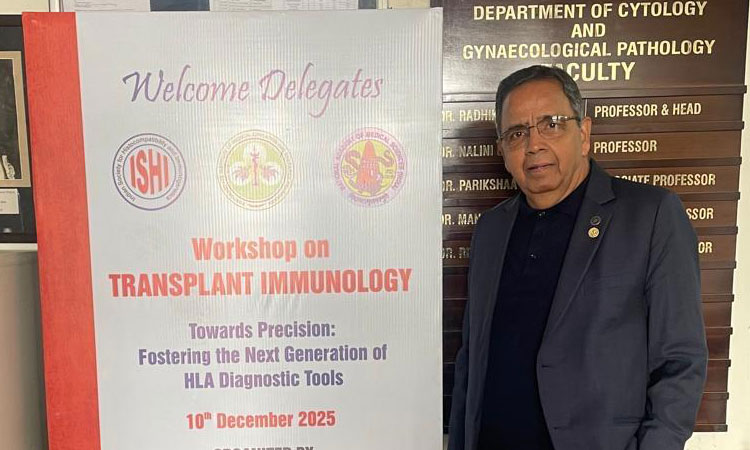
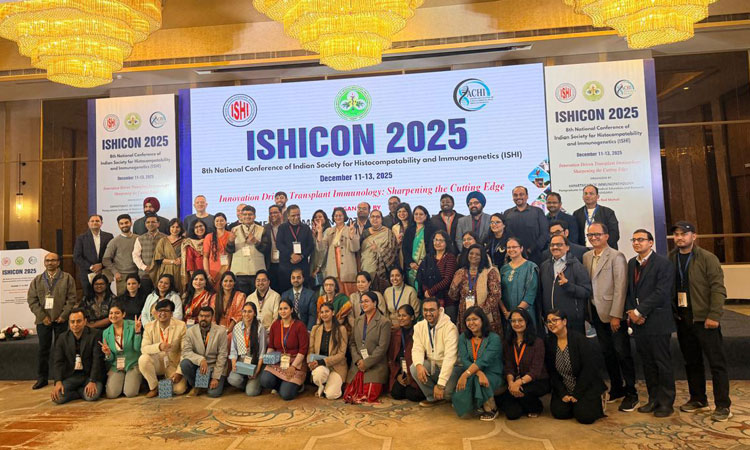
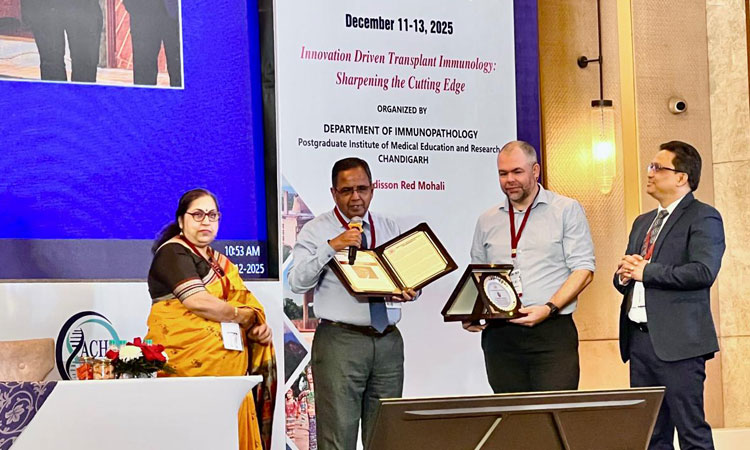
Against this scientific backdrop, the 8th Biannual Conference of the Indian Society of Histocompatibility and Immunogenetics (ISHICON 2025) was successfully held at Hotel Radisson Red, Chandigarh. The conference was organized by Prof. Biman Saikia and Prof. Ritu Agarwal of the Department of Immunopathology, PGIMER, Chandigarh, and served as a highly enriching academic platform. A major highlight of the conference was the prestigious “Narinder Mehra Oration”, instituted in honor of Prof. Narinder Mehra, currently serving as Advisor (R&D), KIMS, KIIT University. The oration this year was delivered by Prof. Alejandro Madrigal OBE (UK), who shared invaluable insights drawn from his vast experience and contributions to the field of histo-compatibility and transplantation immunology.
ISHICON 2025 witnessed enthusiastic participation from young scientists and clinicians from across India, along with nephrologists, transplant surgeons, and experts in transfusion medicine, reflecting the multidisciplinary reach and growing national impact of the society.
Founded in 2001 during Prof. Mehra’s tenure at AIIMS, the Indian Society of Histocompatibility and Immuno-genetics has evolved into a vibrant professional body dedicated to education, research, and translational advancement. The successful conduct of ISHICON 2025 was graciously acknowledged with thanks and honors from the Hon’ble Vice-Chancellor and Pro-Vice-Chancellor of KIIT University, recognizing the society’s continued contribution to biomedical science and education in India.