

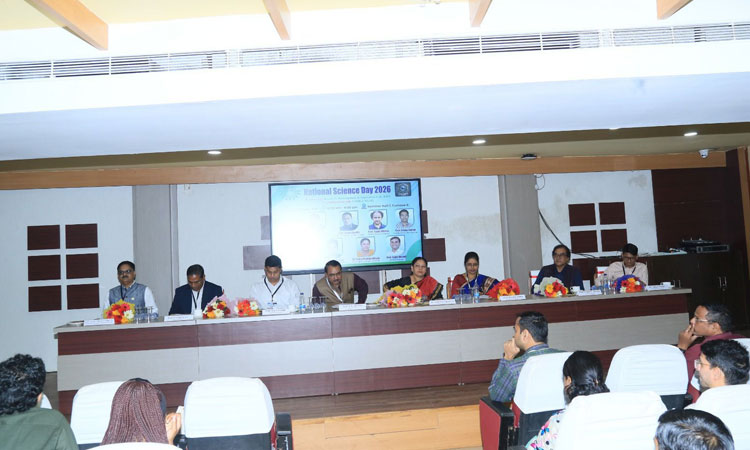
National Science Day–2026 Celebrated at KIIT
National Science Day–2026 was celebrated with great enthusiasm and academic fervour at KIIT Deemed to be University (KIIT DU) on 28th February 2026. The event was organized by the Research, Development & Innovation (RDI) Cell, KIIT, in collaboration with COIR-NGMT, and brought together eminent scientists, academicians, researchers, and students to commemorate the spirit of scientific inquiry and innovation. The day marks the discovery of the Raman Effect by C. V. Raman and serves as a reminder of India’s rich scientific heritage and its enduring commitment to research excellence.
Prof. Rojalin Sahu, Associate Dean, CRF and Head, COIR-NGMT, initiated the session and welcomed all the delegates. The context of the celebration was set by Prof. Suresh Chandra Satapathy, Director, Doctoral Research & Publications, who highlighted the importance of fostering interdisciplinary research and innovation-driven education. Prof. Gopal C. Kundu, Director (R&D), addressed the gathering and emphasized the university’s growing research ecosystem and expanding global collaborations.
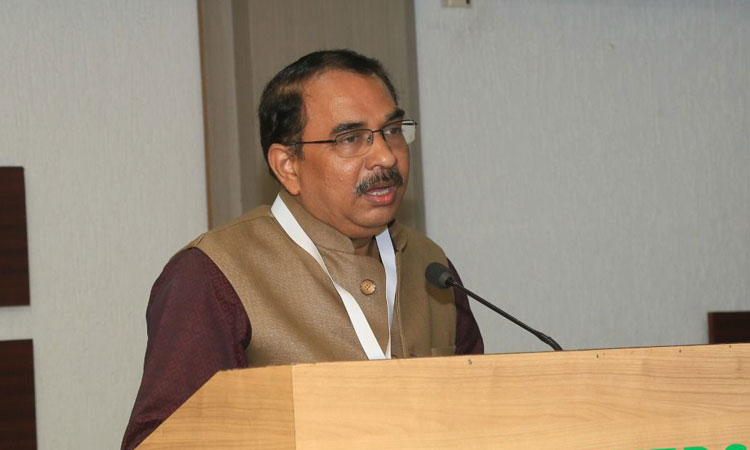
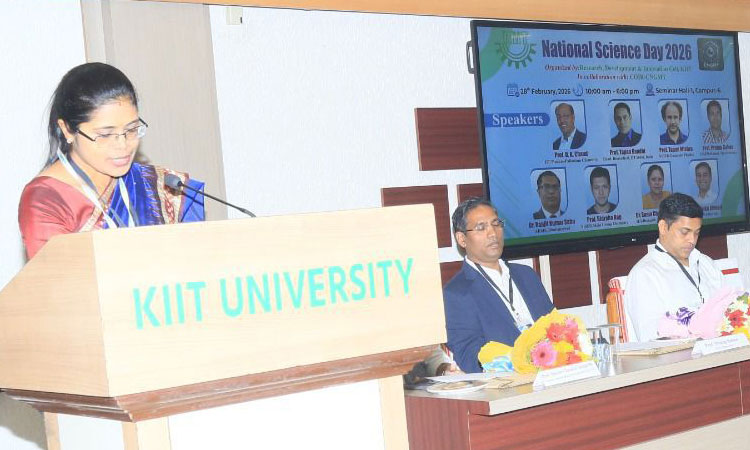
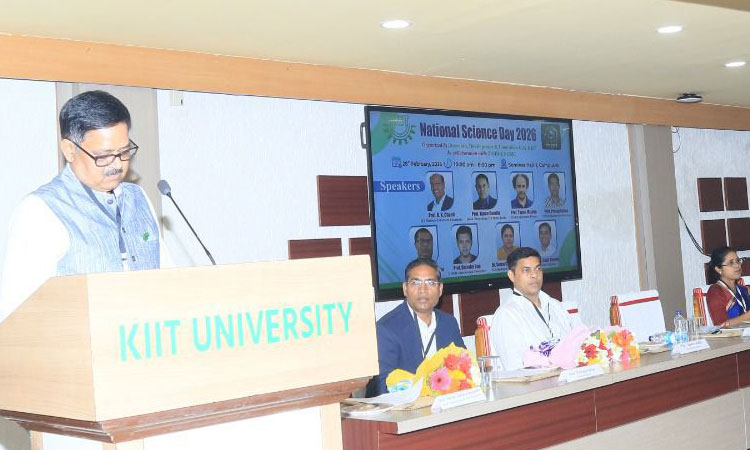
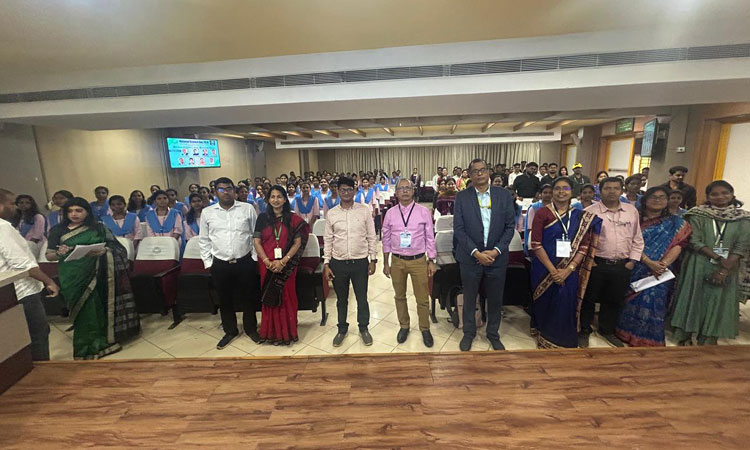
The formal welcome address was delivered by Prof. Jnyana Ranjan Mohanty, Registrar, KIIT DU, who extended greetings to the distinguished guests and participants. The inaugural session was enriched by insightful addresses from the distinguished Guests of Honour. Prof. Pratap Sahoo from NISER spoke on emerging frontiers in scientific research. Dr. Soma Chattopadhyay, Scientist-F at the Institute of Life Sciences, shared perspectives on recent advancements in life sciences research. Prof. Tapan Gandhi, Head of Biomedical Engineering at IIT Delhi, discussed innovations in biomedical technologies and their societal impact. The inaugural session concluded with a vote of thanks proposed by Dr. Amlana Panda, Assistant Registrar (R & D).
The technical sessions commenced with a series of thought-provoking lectures. Dr. Soma Chattopadhyay delivered a talk on the molecular characterization of adaptive capsid mutations to understand enhanced chikungunya virus infection. Prof. Tapan Gandhi spoke on visual learning and artificial intelligence. Prof. Pratap Sahoo presented a lecture on advancing the legacy of C. V. Raman through contemporary Raman spectroscopy. Prof. Bidraha Bag from the National Institute of Science Education and Research spoke on base metal-catalyzed chemodivergent oxidation of lignin vanillyl alcohol, highlighting media-induced formation of vanillin and vanillic acid.
The post-lunch session featured enriching talks by Prof. Sakir Ahmed from Kalinga Institute of Medical Sciences, who spoke on predicting the trajectory of reactive arthritis—from triggering microbes to networked immunity. Prof. Tapan Mishra from the National Institute of Science Education and Research delivered a lecture on ultracold matter. Dr. Ranjit Kumar Sahu from All India Institute of Medical Sciences, Bhubaneswar, spoke on plastic surgery and its transformative social impact. Prof. D. K. Chand from IIT Madras, in hybrid mode, discussed advancements in palladium catalysis. Each speaker presented cutting-edge research insights, fostering meaningful dialogue and intellectual exchange among participants.
The programme concluded with remarks by Dr. Ramaya Pinnamaneni, followed by an engaging open discussion session with students, which encouraged young minds to interact directly with leading scientists and academicians.
National Science Day–2026 at KIIT stood as a testament to the university’s commitment to advancing scientific research, promoting collaborative innovation, and inspiring the next generation of researchers to contribute meaningfully to society.